
A business in Nigeria can survive many things, but it cannot survive its internet going down during a client call, a payment run, or a delivery dispatch. So the connectivity question deserves real thought. In 2026, most businesses are choosing between three realistic options: Starlink satellite internet, fibre broadband where it exists, and 4G routers running on mobile networks. Each has a genuine case. This comparison covers what they actually cost, how they actually perform, and which suits which kind of business.
What each option really is
Fibre is the wired gold standard, where you can get it. A fibre line runs physically to your building from a provider like FibreOne, ipNX, or a local ISP, delivering fast, stable speeds with low delay. Where coverage exists, mostly in parts of Lagos, Abuja, and Port Harcourt business districts, fibre gives the most consistent office internet available in the country. Where it does not exist, no amount of money speeds up the waiting.
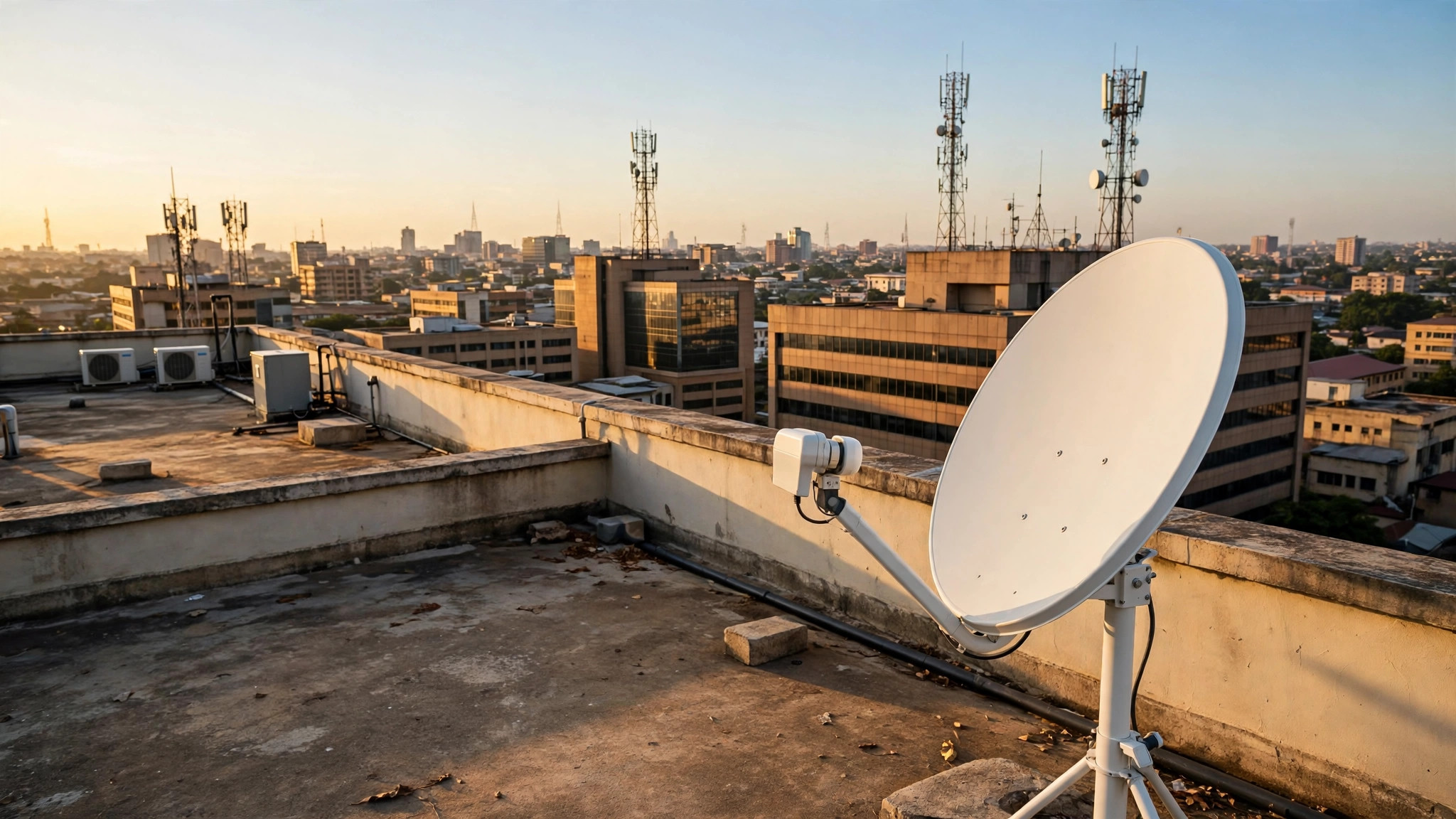
Starlink is satellite internet with Nigerian momentum. SpaceX’s service beams internet from orbit to a dish on your roof, which means it works almost anywhere with a clear view of the sky, from Lekki to Kano. Speeds are genuinely fast, commonly well above what offices need, and the equipment is a one time purchase with a monthly subscription. It has become the default serious option for businesses outside fibre zones.
4G is the flexible fallback that often becomes the main line by accident. A router with an MTN, Airtel, or Glo SIM, sometimes with an external antenna, gives many small offices workable internet for very low entry cost. Performance depends entirely on your exact location’s network congestion, which is why the same provider can be brilliant on one street and hopeless two streets away.
Cost, honestly compared
Entry costs differ sharply. 4G starts cheapest, a decent enterprise router and SIM for a small fraction of the alternatives. Fibre installation ranges from free promotional offers to meaningful fees depending on distance from the provider’s infrastructure. Starlink requires buying the kit upfront, which has moved in price with exchange rates, so confirm the current figure before budgeting, then a fixed monthly subscription after that.
Monthly costs reward counting users, not just speed. A five person office doing email, cloud tools, and calls uses surprisingly little data by modern standards, and a 4G plan can look cheap until heavy users finish the bundle mid month. Fibre and Starlink sell mostly unlimited usage, which simplifies budgeting. Price per reliable working hour is the real comparison, and downtime has a cost too, even if no invoice shows it.
Hidden costs catch the unwary. Starlink needs a clear sky view, which can mean mounting costs on tall buildings, and its dish uses steady power through the day. Fibre needs installation time and sometimes landlord permission battles. 4G needs constant data top ups and the staff time spent managing them. Add power backup for whichever you choose, because all three are equally dead when the router has no electricity.
Reliability and speed in real conditions
Fibre wins on stability when the line is healthy. Rain does not bother it, network congestion barely affects it, and speeds stay flat across the working day. Its weakness is physical: one careless roadworks crew cutting the cable can take a whole street offline for days, and repair speed depends on the provider.
Starlink wins on independence. It does not care about cables, distance, or local infrastructure, and performance is consistent across most of Nigeria. Heavy rain can briefly reduce speeds, and the dish needs that unobstructed sky, but for businesses in areas fibre forgot, nothing else is close. Video calls and cloud work run comfortably on it.
4G varies the most and forgives the least. At 10 AM in a congested district, speeds can collapse, and rain fade plus tower load make it the least predictable option for a business that lives on calls. Its strength is mobility and backup duty, not carrying a growing office alone.
The smart answer for most businesses is a pair
Use the best available line as primary, and keep 4G as backup. A fibre office with a 4G failover router, or a Starlink office with 4G behind it, survives almost every realistic outage. Failover routers switch automatically when the main line drops, so staff notice nothing. The backup line costs little monthly and pays for itself the first time it saves a trading day.
Match the choice to the business. A small shop doing POS and WhatsApp orders runs fine on good 4G with a backup SIM from a second network. A design studio or software team pushing large files all day needs fibre or Starlink as the main line. A warehouse, farm, or site office outside the city should start the conversation at Starlink and skip the rest.
Test before you commit. For 4G, test each network at your exact premises during working hours for a week. For fibre, ask neighbouring businesses on the same provider how repairs actually go. For Starlink, confirm your roof’s sky view before paying. A week of testing saves a year of complaining.
The bottom line
In 2026, Nigerian businesses are not choosing between good and bad internet, they are choosing between different strengths. Fibre is the most stable where it exists, Starlink is the most available serious option almost everywhere else, and 4G is the cheap, flexible backup every business should keep regardless. Pick your primary by location and workload, pair it with a failover line, power it properly, and your internet stops being a daily topic of conversation, which is the highest praise office internet can earn.
Recommended: Grow Your Business Online
- Facebook Ads Domination (for Business Owners) — learn to run profitable Facebook ads and get more customers ($21). Check it out
- Facebook Advertising In 60 Minutes — fast-track course to launch your first ads in an hour ($50). Check it out
- FAF Mastery System — Facebook ads plus sales funnels that turn clicks into customers ($15). Check it out
Disclosure: These are affiliate links. If you buy through them, I may earn a commission at no extra cost to you.


Leave a Reply