
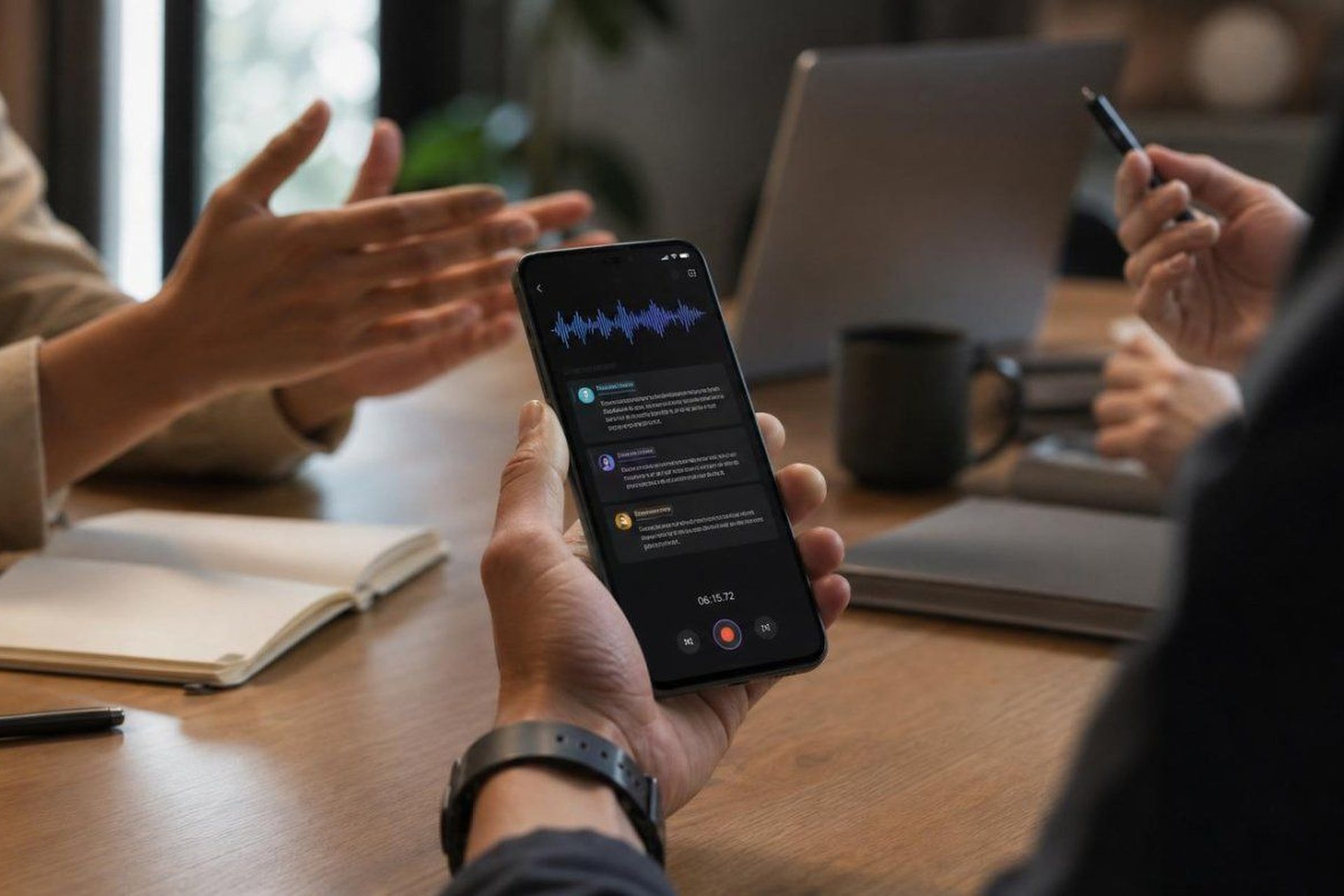
Every meeting ends the same way. People made decisions, assigned tasks, and agreed on prices, and almost none of it was written down. A week later, the argument starts about what was actually said. Meanwhile your phone holds forty WhatsApp voice notes from customers and staff, each one containing an instruction you will have to replay three times to catch. This gap between what was said and what was recorded is where small businesses quietly lose money.
AI transcription closes that gap. Modern tools listen to a recording and return readable text in minutes, and they have become accurate and cheap enough for everyday business use. This article covers where transcription earns its keep, from meetings to sermons, the honest truth about accuracy with Nigerian accents and pidgin, what free tools give you versus paid ones, and how to turn raw transcripts into minutes, quotes, and content your business can actually use.
Where transcription earns its keep
Meetings become minutes without a dedicated note taker. Record the meeting on a phone placed in the middle of the table, transcribe it, and you have a searchable record of every decision and promise. Instead of one staff member scribbling and missing half the discussion, everyone participates fully, and the transcript settles later disagreements with evidence instead of volume. For businesses run through endless phone calls with suppliers and clients, this alone changes how accountable people become.
WhatsApp voice notes become text you can search and forward. Nigerian business runs on voice notes, and they are terrible as records. You cannot search them, skim them, or forward the important thirty seconds without the whole five minutes. Transcribing a client’s long voice note gives you their exact requirements in writing, ready to paste into a quote, a task list, or a message to your team. Several tools now transcribe voice notes automatically the moment they arrive.
Interviews, sermons, and training sessions become reusable assets. A pastor’s sermon, transcribed, becomes a devotional booklet, social media posts, and a searchable archive. A customer interview becomes testimonials and product insight. A training session becomes a manual new staff can read. Audio locked in a file can be used once, by whoever was present. The same material as text can be searched, quoted, edited, and republished for years at almost no extra cost.
The honest truth about accuracy
Clear Nigerian English transcribes well, but not perfectly. The major tools have improved greatly with Nigerian accents, and a clean recording of standard English will usually come back 90 percent accurate or better. Names suffer most: Nigerian personal names, company names, street names, and local product terms are routinely mangled into similar sounding English words. Budget a quick review pass for any transcript that will be quoted, published, or sent to a client.
Pidgin and local languages are where the tools still struggle. Most transcription services are trained mainly on English, so a voice note that slides between English, pidgin, Yoruba, Hausa, or Igbo will come back with gaps and creative guesses, and purely local language audio may fail almost completely. A few newer tools advertise support for major Nigerian languages, but treat those claims as a starting point to test with your own recordings, not a promise to build on.
Recording quality matters more than the choice of tool. The same service will produce a clean transcript from a quiet room and a mess from a noisy market stall. Put the phone close to the speakers, not across the room. Ask people to speak one at a time, because overlapping voices defeat every tool. Say names and figures clearly, and spell unusual names once. Ten seconds of discipline while recording saves ten minutes of correction afterward.
Free tools, paid tools, and what the difference buys
Free options cover more than most businesses expect. The recorder apps on many phones now offer free transcription, WhatsApp itself has been rolling out voice note transcripts, and the free tiers of web tools typically include a few hundred minutes a month. For a small business transcribing two or three meetings a week, free may genuinely be enough. Start there, learn your real usage, and only pay when you hit a limit that is actually costing you time.
Paid tools charge roughly like a small software subscription. Expect the equivalent of ₦8,000 to ₦25,000 a month for the popular services, often billed in dollars per user, with some charging per hour of audio instead. What the money buys is volume, speed, and structure: speaker labels that show who said what, automatic summaries and action lists, searchable libraries across all your recordings, and integrations that file transcripts where your team already works.
Be careful where sensitive recordings go. A transcript service processes your audio on its own servers, which means board discussions, client negotiations, staff disciplinary meetings, and legal conversations are being heard by a third party’s systems. Read the privacy terms before uploading anything confidential, prefer tools that let you delete recordings permanently, and keep genuinely sensitive matters on tools you control or off transcription entirely. Convenience is not a defense if a client’s private business leaks.
Turn raw transcripts into documents people use
A transcript is raw material, not a finished document. Raw transcripts are rambling, repetitive, and full of small errors, and nobody will read 6,000 words of meeting talk. Run the transcript through an AI assistant or a careful human editor and pull out the three things people actually need: the decisions made, the tasks assigned with names and deadlines, and the open questions. That one page summary is the document that gets read, forwarded, and acted on.
Mine transcripts for content and quotes. Inside every customer interview and every sermon or training recording are sentences your marketing wishes it had written: a client describing their problem in their own words, a line that explains your value better than your brochure does. Keep a running file of strong quotes as you review transcripts. Over a few months it becomes a library for proposals, social media posts, and your website, all in language your customers already use.
File transcripts like records, not like downloads. Name every file with the date, the people involved, and the subject, and store them in one shared folder instead of scattered across phones. Six months from now, when a client disputes a price or a staff member disputes an instruction, the person who can produce the transcript in two minutes wins the argument calmly. Searchable records of what was said are a quiet form of power in business.
The bottom line
Your business already says everything that matters out loud, in meetings, calls, and voice notes. Transcription simply stops those words from evaporating. Start with the free tools, record cleanly, expect to correct Nigerian names and to struggle with pidgin, protect sensitive recordings, and convert every important transcript into a one page summary with decisions and deadlines. Do that consistently, and your business gains a memory it never had.
Recommended: Grow Your Business Online
- Facebook Ads Domination (for Business Owners) — learn to run profitable Facebook ads and get more customers ($21). Check it out
- Facebook Advertising In 60 Minutes — fast-track course to launch your first ads in an hour ($50). Check it out
- FAF Mastery System — Facebook ads plus sales funnels that turn clicks into customers ($15). Check it out
Disclosure: These are affiliate links. If you buy through them, I may earn a commission at no extra cost to you.


Leave a Reply