
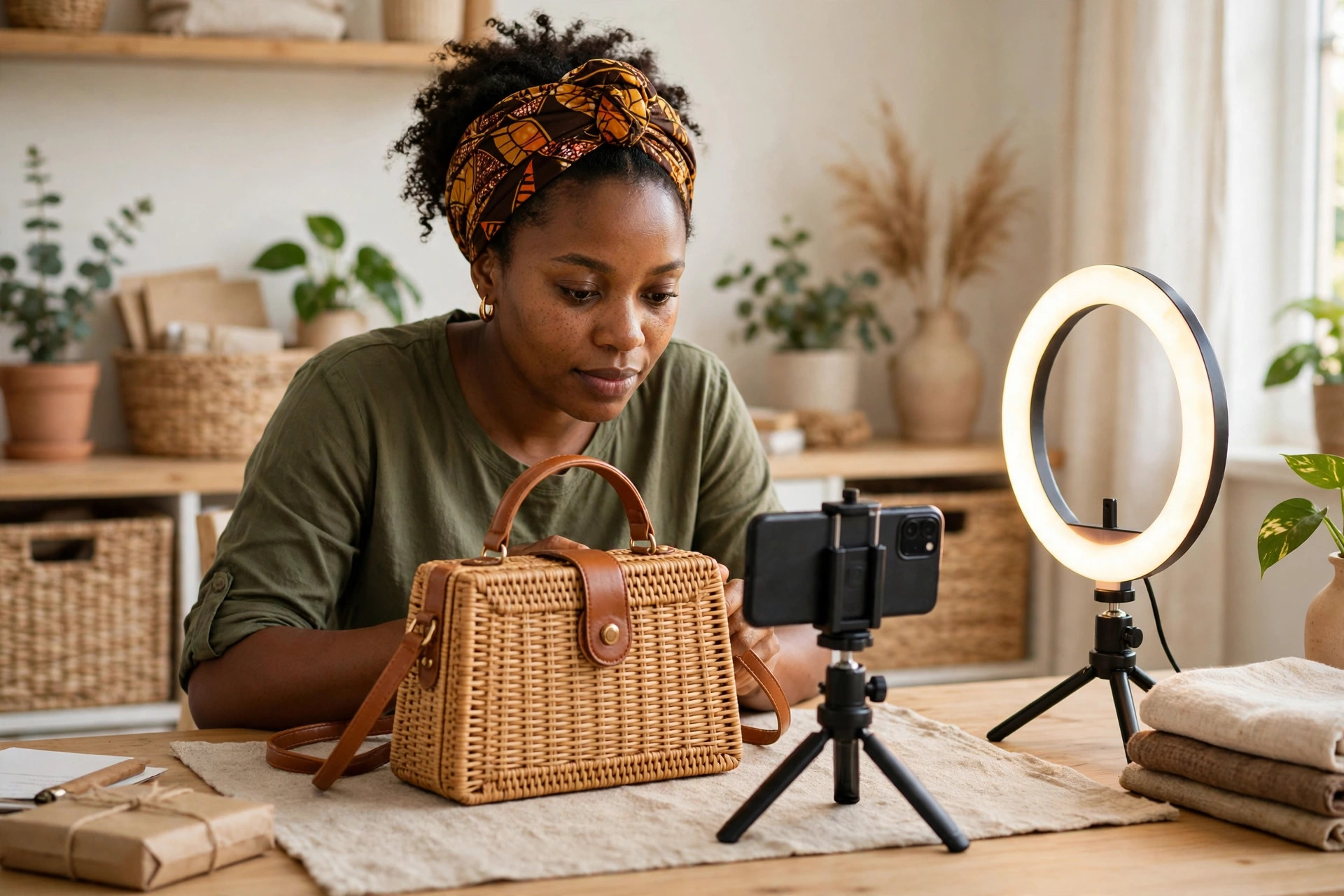
Every online seller in Nigeria knows the product photo problem. Professional photography costs money per item, phone photos on the bed or shop counter look amateur, and customers judge the product by the picture long before they read the description. So the promise of AI image tools sounds perfect, upload one ordinary photo and receive a polished studio shot in seconds. We tested that promise against the situations sellers actually face, skincare jars, fashion items, shoes, and packaged goods, to see where these tools genuinely help and where they quietly let you down.
What the test involved
Real seller scenarios, not perfect samples. We started with the kind of photos sellers really have, items photographed on a phone in ordinary light, not studio shots. Each product went through the common AI treatments, background removal and replacement, lifestyle scenes such as a bathroom shelf or a styled table, and full generation, where the tool rebuilds the whole image from the photo and a written description. The question throughout was simple, would this image make a customer trust the product more, and would the product they receive match it?
Where AI genuinely works
Backgrounds are the clear win. Removing a messy shop background and replacing it with a clean colour, a soft shadow, or a simple surface worked reliably across nearly every item we tried. The product itself stays untouched, so accuracy is preserved while the photo instantly looks deliberate. For catalogue pages and marketplace listings, this alone justifies trying the tools.
Lifestyle scenes work, when the product stays real. Placing the actual photographed product into a generated scene, a perfume bottle on a dressing table, a bag beside a café cup, produced images that would have cost a location shoot to make. The best tools keep your product’s pixels and generate only the world around it. That distinction, scene generated, product real, is the line between help and trouble.
Props, lighting mood, and seasonal versions. AI handled surrounding props, soft window light, and festive variations of an existing photo well. One good product photo became a regular version, a December version, and a promo version in an afternoon, work that would previously have needed three separate shoots.
Where AI fails, sometimes badly
Labels and text come out wrong. On packaged goods, regenerated labels were the biggest failure. Brand names bent, ingredient lists turned into convincing looking nonsense, and small print melted. A customer zooming in sees gibberish, and a regulator or the brand owner may see worse. If your product’s label matters, never let the tool redraw it.
Colours drift from the truth. A deep red dress came back closer to wine in one generation and orange red in another. Skin tones on models shifted. For fashion and beauty, colour is the product, and a shade that looks different on arrival is a return waiting to happen.
Fine details get invented. Shoe stitching changed pattern, jewellery gained extra stones, bag hardware multiplied. Each image looked beautiful at a glance and wrong on inspection, which is exactly the combination that damages trust when the parcel arrives.
The honesty line you must not cross
A product photo is a promise. Nigerian customers already shop online cautiously, burned by “what I ordered versus what I got” experiences. An AI image that makes a product look bigger, richer, or different from reality may win the first sale and lose the customer, their reviews, and their referrals. Some marketplaces and advert platforms also restrict misleading imagery, and a disclaimer does not rescue a picture that deceives. Use AI to present your real product beautifully, never to upgrade it into a product you do not sell.
A workflow a Nigerian seller can actually use
Step 1, take one honest, sharp photo. Clean the item, use daylight near a window, fill the frame, and photograph every colour you sell. This photo is your truth source, so it is worth ten careful minutes.
Step 2, cut the product out and let AI build only the background. Use background replacement or scene tools that preserve the product untouched. Check the result zoomed in, especially edges, labels, and colours, against the real item beside you.
Step 3, generate variations from the approved version. Seasonal scenes and promo backgrounds can branch from the one checked image instead of new generations of the product itself, which keeps errors from creeping back in.
Step 4, keep one completely real photo in every listing. Alongside the polished images, include at least one straight phone photo, ideally with the item in hand or beside a known object for scale. Sellers in our test scenarios found this combination reassuring rather than amateur, because it proves the beauty shots are honest.
What it costs. Most tools offer free tiers with daily limits, enough to test properly. Paid plans commonly run $10 to $30 a month, roughly ₦16,000 to ₦50,000, which undercuts a single professional shoot covering dozens of products, provided your time in checking images is counted honestly.
The bottom line
AI image tools are excellent stage builders and poor product impersonators. Let them remove ugly backgrounds, create lifestyle scenes, and spin seasonal versions, but keep the product itself exactly as photographed, guard its label and colours with your own eyes, and keep one real photo in every listing. Used that way, a seller with a phone and an afternoon can produce images that look professional and stay honest, which is the only combination that keeps paying.
Recommended: Grow Your Business Online
- Facebook Ads Domination (for Business Owners) — learn to run profitable Facebook ads and get more customers ($21). Check it out
- Facebook Advertising In 60 Minutes — fast-track course to launch your first ads in an hour ($50). Check it out
- FAF Mastery System — Facebook ads plus sales funnels that turn clicks into customers ($15). Check it out
Disclosure: These are affiliate links. If you buy through them, I may earn a commission at no extra cost to you.


Leave a Reply