
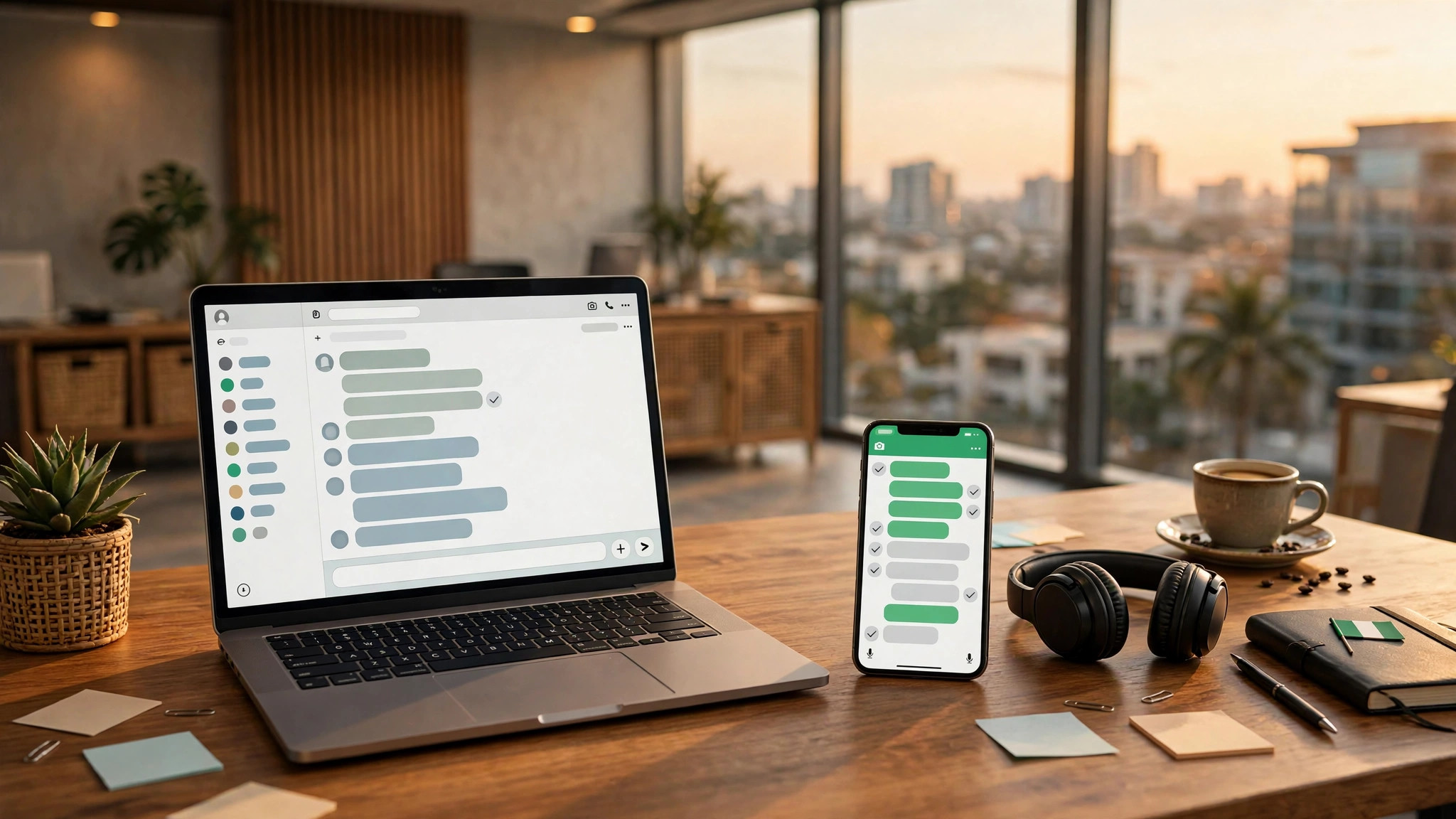
Everywhere you look, someone is selling business owners an “AI chatbot” that will answer customers, take orders, and work while you sleep. Some of the promises are real, and some are expensive hype. If you run a Nigerian business website, here is an honest assessment of what chatbots actually do well, where they fail, what they realistically cost, and when a humble WhatsApp button does the job better.
What chatbots actually do well
Answering repeat questions instantly. “What are your opening hours?” “Do you deliver to Lekki?” “How much is the 5kg bag?” If your staff types the same answers fifty times a day, a chatbot handles those in seconds, at 2 AM, without getting tired or rude. This is the single strongest use case, and it genuinely works.
After-hours coverage. Most Nigerian customers browse and ask questions in the evening, after work, when your shop is closed and your phone is on silent. A chatbot keeps the conversation going, collects the customer’s details, and hands you a warm lead in the morning instead of a missed opportunity.
WhatsApp integration. This matters enormously in Nigeria, because WhatsApp is where business actually happens. Many chatbot tools plug directly into WhatsApp Business, so customers chat in the app they already use all day, and the bot answers from your business number. A website chatbot that ignores WhatsApp is missing where your customers live.
Lead capture and simple booking. A bot can walk a visitor through “what service do you need, what is your name and number,” and drop that into your inbox or a spreadsheet. For service businesses like salons, clinics, and repair shops, this turns casual browsers into callback lists.
What they do badly
Anything that needs real judgment. Chatbots are confident guessers. Ask about a complicated order, a complaint, or an unusual request, and they will cheerfully invent an answer. A bot that tells a customer “yes, we deliver to Sokoto” when you do not is worse than no bot at all, because you now have an angry customer holding a screenshot.
Nigerian context and language. Many bots stumble on the way Nigerians actually type: abbreviations, Pidgin, mixed English, location names, and price haggling. “How much last?” is a perfectly normal Nigerian question that confuses a bot trained on formal English. Unless the bot is set up with local phrases in mind, expect awkward moments.
Trust. Nigerians are rightly cautious about scams, and some customers distrust a chat window that feels robotic, especially when money is involved. A bot that cannot quickly hand over to a human when asked will lose you the exact customers you most want: the serious buyers.
Maintenance. A chatbot is not install-and-forget. Prices change, products go out of stock, delivery areas shift, and every change has to be fed into the bot’s knowledge. An outdated bot confidently quoting last year’s prices will cost you more in lost trust than it ever saved in staff time.
Realistic costs in naira
Costs vary widely, so think in ranges. A simple rule-based chatbot, one that follows a fixed script of buttons and answers rather than true AI, can be set up for roughly ₦50,000 to ₦250,000, with little or no monthly fee beyond your existing hosting. A proper AI chatbot connected to WhatsApp, trained on your business information, typically costs ₦200,000 to ₦1 million to set up well, plus ongoing monthly costs roughly in the tens of thousands of naira for the AI service usage and the WhatsApp messaging fees. Fully custom chatbot builds from agencies run higher still, often into seven figures. Be wary of anyone quoting suspiciously cheap prices for “full AI”: you are likely getting a basic script with an AI label stuck on it.
When a simple WhatsApp button beats a chatbot
For many small Nigerian businesses, the honest answer is that you do not need a chatbot at all. A floating WhatsApp chat button on your website, the green button that opens a chat with your business number, costs almost nothing, needs no maintenance, and connects customers to a real human: you. If your daily message volume is something you can personally handle, say under fifty chats a day, the button wins on every measure: cost, trust, flexibility, and zero risk of the bot inventing answers.
A chatbot starts making sense when the volume overwhelms you: hundreds of messages daily, the same ten questions on repeat, and customers messaging at hours you cannot cover. Even then, the winning setup is usually a hybrid: the bot handles FAQs and collects details, and a human takes over the moment things get complicated or a customer asks.
How to decide
Get one if you receive high message volumes, your FAQs are stable and well documented, you can invest in proper setup and monthly upkeep, and you commit to reviewing the bot’s conversations weekly at first to catch its mistakes.
Skip it if your message volume is manageable by hand, your answers change constantly, you cannot budget for ongoing costs, or your customers mostly need the reassurance of talking to a real person before they pay. There is no shame in the WhatsApp button; some of Nigeria’s most successful online vendors run entirely on it.
The bottom line
AI chatbots are a genuine productivity tool in 2026, not magic. They excel at instant answers, after-hours coverage, and lead capture, and they fail at judgment, nuance, and anything you have not kept updated. Price them honestly, start with the WhatsApp button if your volume is small, and only graduate to a chatbot when the message load proves you need one. Technology should remove work from your day, not add a new thing to babysit.
Recommended: Grow Your Business Online
- Facebook Ads Domination (for Business Owners) — learn to run profitable Facebook ads and get more customers ($21). Check it out
- Facebook Advertising In 60 Minutes — fast-track course to launch your first ads in an hour ($50). Check it out
- FAF Mastery System — Facebook ads plus sales funnels that turn clicks into customers ($15). Check it out
Disclosure: These are affiliate links. If you buy through them, I may earn a commission at no extra cost to you.


Leave a Reply